Referrals scatter
Referrals live in inboxes, spreadsheets, texts, voicemails, and people’s heads.
Clinical operators
Teryli gives behavioral health teams an operational layer for referrals, placement, discharge readiness, and step-down coordination, while the clinical record stays in the EHR.
The problem
Referrals live in inboxes, spreadsheets, texts, voicemails, and people’s heads.
Case managers chase programs while admissions and clinical teams do not always see the same status.
Step-downs fail when ownership, readiness, and follow-up are unclear.
Core workflow
Every referral runs the same loop: one named owner and a visible status at each step, so a placement never stalls silently in someone’s inbox.
Analytics from step 08 feed the next referral. The loop repeats.
Operational surfaces
Track what came in, who owns it, where it stands, and which next step is due.
See overdue, due-this-week, and on-track items before they disappear into a Friday afternoon.
Keep required handoff work visible across documents, appointments, logistics, and owner follow-through.
Compare placement options by location, level of care, population, status, and verified details.
Keep referents and internal teams aligned when appropriate, without rebuilding every update from scratch.
Show where referrals stall, where step-downs leak, and where operational follow-up is consistently late.
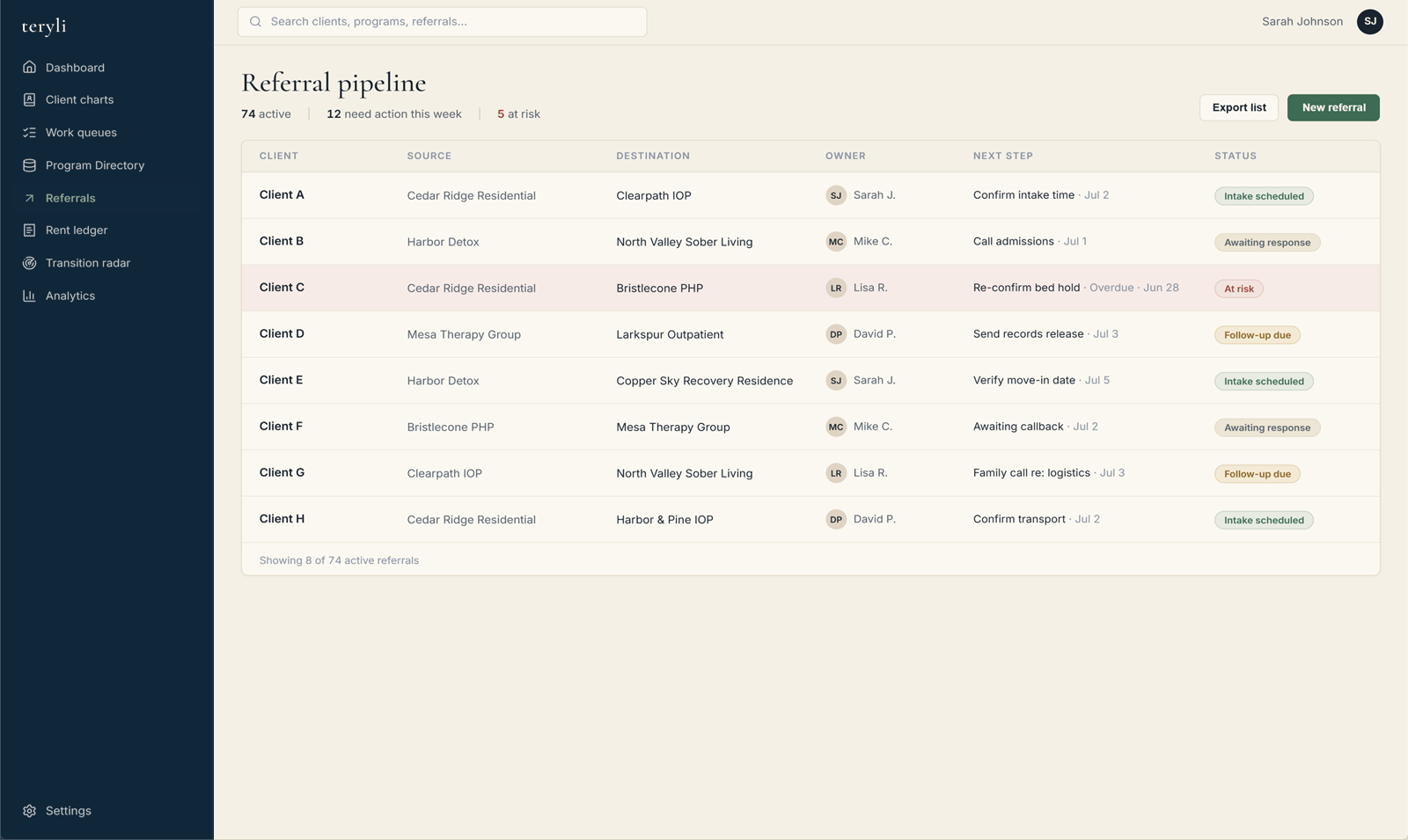
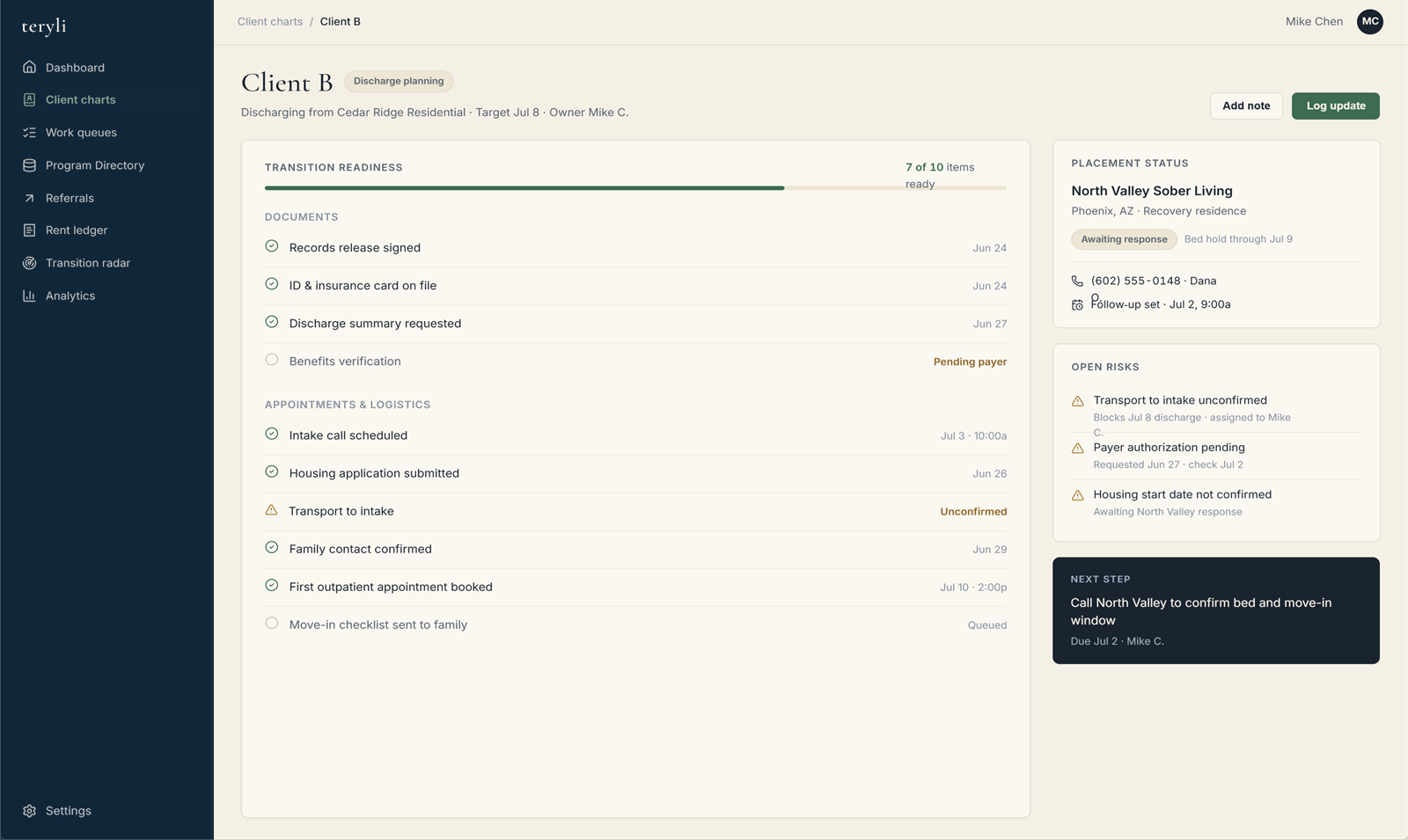
Real workflow surface
A transition is not just a referral status. It is readiness, due work, placement options, outbound follow-up, and leadership visibility.
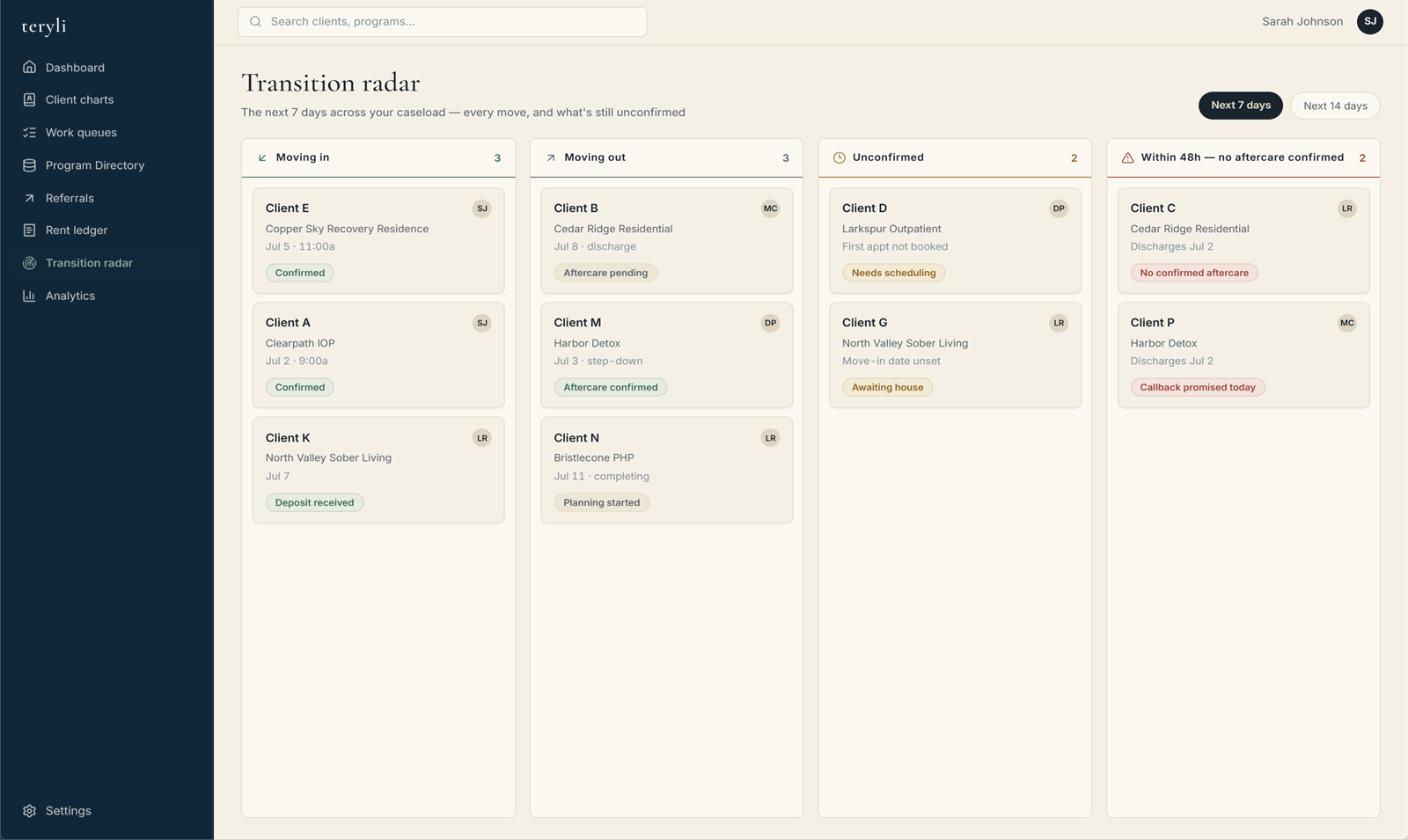
See what is moving this week, what is unconfirmed, and what needs escalation.
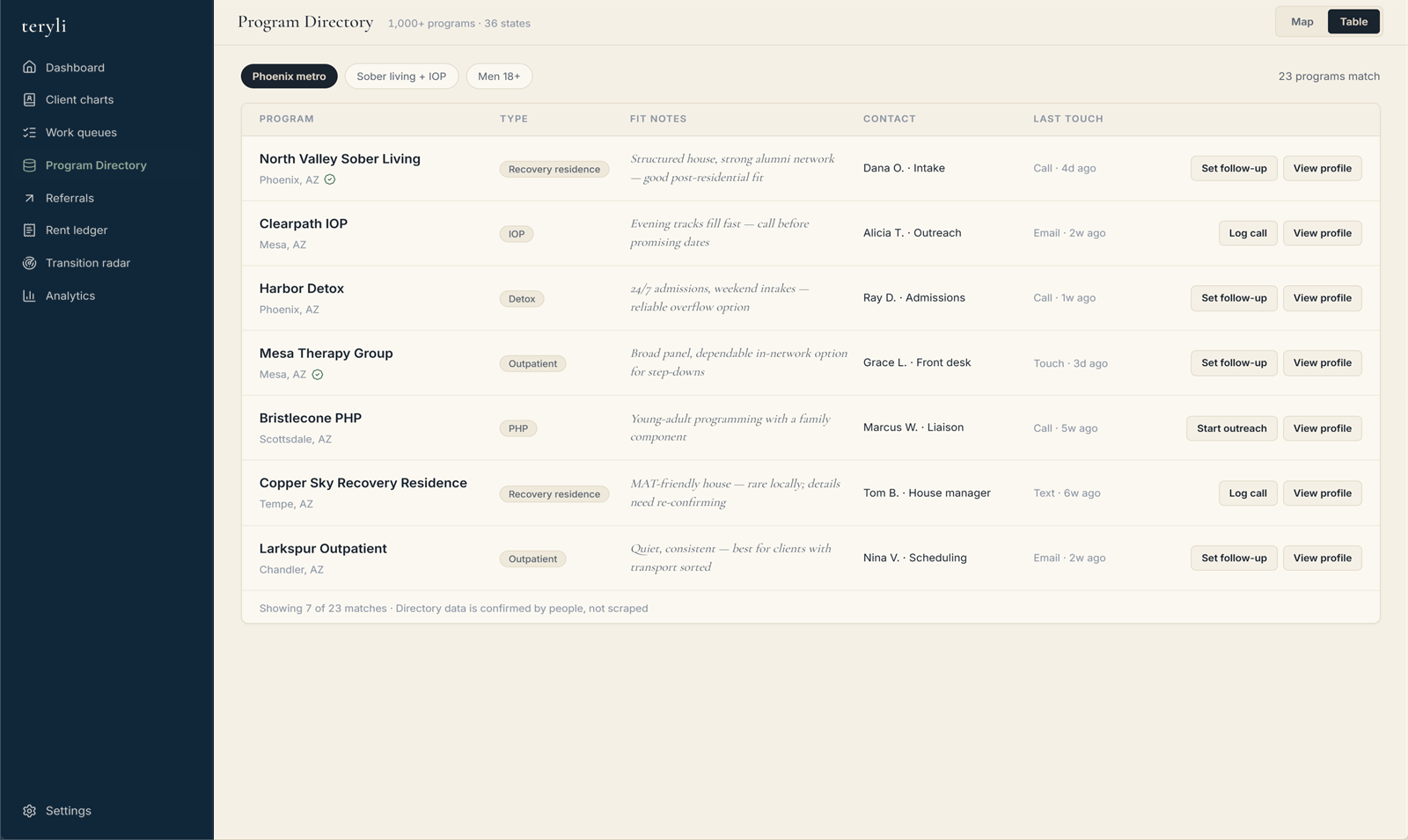
Compare programs by criteria, status, and verification without paid ranking.
Trust boundary
Teryli is for operational coordination: ownership, readiness, referrals, follow-ups, placement options, and status visibility. The formal clinical record stays in the EHR.
Who uses it
See what came in and what needs action.
Track readiness, placements, and follow-ups.
See what is stuck before it fails.
See workload, bottlenecks, and outcomes.
Keep referents aligned when appropriate.
Keep the handoff loop from living in separate team updates.
Clinical coordination
Bring a recent referral, discharge, or step-down. We will map where it gets stuck and show how the operational loop fits.